Renewability
The protective coating is built to be refreshed indefinitely as long as the wall is holding up. Every cycle removes paint wear and restores protection without disturbing the paint underneath.
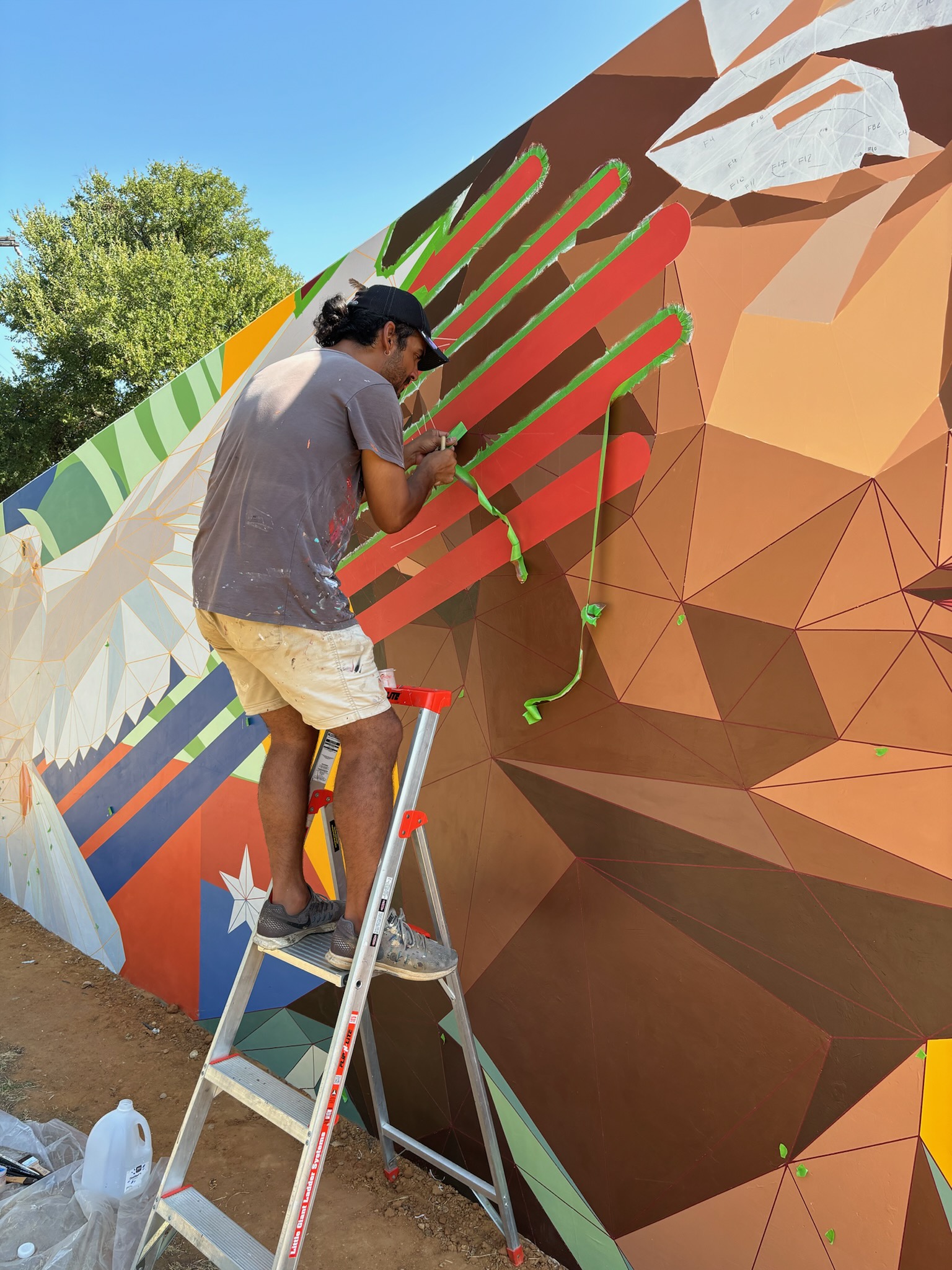
Jhonattan founded Anemos after more than a decade spent painting large-scale public murals across the United States. He runs Art of Anón with his wife Samantha, a public mural practice that has produced more than forty commissioned works and provided the fieldwork that built Anemos. Their public work has been commissioned by municipalities, public art programs, and corporate clients such as Starbucks.
A Hospital Corpsman in the U.S. Navy before civilian life, he later earned a degree in graphic design and focused on studio arts. His format led him to muralism, which deepened further through the incorporation of community painting as part of the practice. Jhonattan has served as a grants panelist for the Houston Arts Alliance for a number of years and is passionate about community engagement and public activations.
Jhonattan cares about public art because it's constantly hard at work in visible and invisible ways, softening the edges of daily life in the concrete jungle. As a meticulous person, he wanted their work to last longer than the five-year lifespan that was asked of most mural commissions. That led him through a long exploration of primers, paints, polymers, and topcoats, and eventually to the piece of the puzzle that makes a mural cyclical rather than temporary. In 2024, their work The Offering, a mural sculpture totaling 600 square feet, entered the City of Dallas permanent public art collection under a projected twenty-year lifespan. Murals usually stay within the temporary collection, containing works expected to last around five years.
Then came a conversation with a Public Art Program Manager whose city had commissioned over three hundred murals and no longer had a way to maintain them. Some were fading, some were tagged, and some were simply old. Recommissioning was expensive and tracking every artist for a touchup wasn't realistic. The city was spending real money on work that wasn't built to last, and over time, that can create a lot of tension within an art program. That conversation made the problem undeniable, and Anemos followed from it.
Every Anemos engagement rests on the same four commitments.
And shaped by the environments public murals live in, from Florida Keys humidity to desert heat to Midwestern winters.
Twenty minutes, no commitment. We'll walk through what you've got and figure out what makes sense together.